

Maggie Gyllenhaal’s latest film has been anticipated for a year now, with speculation over its quality and some slightly ascendant buzz following the realest of its trailer.
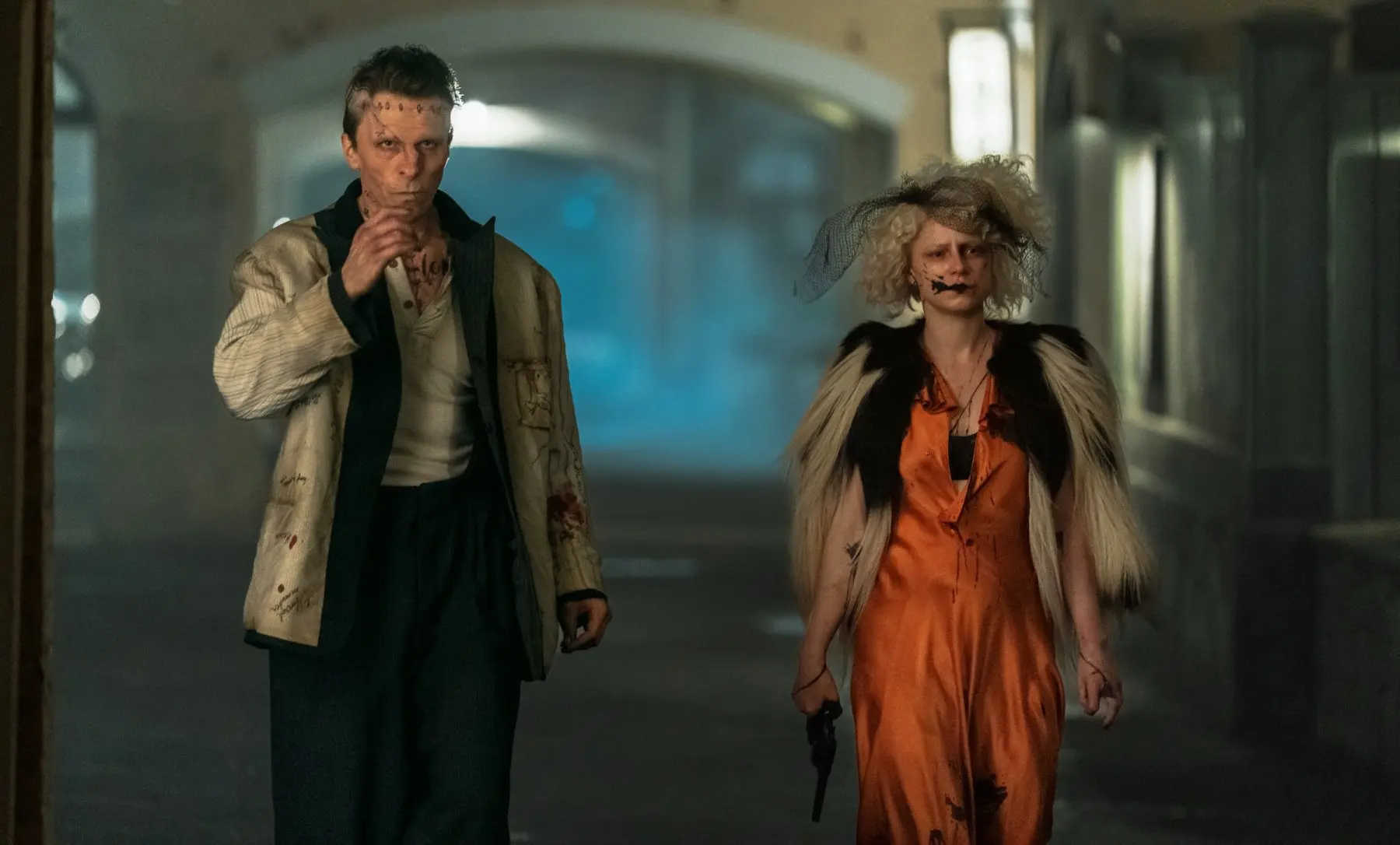
The Bride! Is set in 1930s Chicago, a young woman named Ida (Jessie Buckley) is killed by mobster Lupino (Zlatko Burić) and buried in a pauper’s grave. Soon after, Frankenstein (Christian Bale) visits groundbreaking scientist Dr. Euphronious (Annette Bening) in the hopes that she can create a companion for him to cure his loneliness. The two find the grave that ends up being Ida’s and bring her back to life, albeit with amnesia. Frankenstein and Ida, who he has now renamed Penelope, go on a Bonnie and Clyde-like crime spree while Ida tries to remember her past and discover who she really is all while being chased by Detective Jake Wiles (Peter Sarsgaard) and his assistant Myrna Mallow (Penélope Cruz).
As the film goes on, it becomes apparent that Gyllenhaal approached The Bride! with many ideas and much to say. Unfortunately, she decided to attempt to say it all resulting in an unfocused film that feels jumbled and random as a result. This is probably best encapsulated by the few random musical numbers that break out during the film out of nowhere, disrupting the pacing and continuity. Themes like consent, the mistreatment of women, and identity are touched upon through Ida’s journey as she at first shuns the attempt to marry her off to Frankenstein, gives an impassioned monologue during a standoff with police where the memory of her past encounters with murdered women resurface and inspire an uprising of frustrated women, and tries to dig into her past and learn her name, but all of these issues are just mentioned and then discarded without any real substantive deep dive into them. We see one segment of women with makeup like Ida’s, yelling “Brain attack!” as she did…and then the widespread riots are just mentioned once more in passing by Myrna and never surface again. She spins much of the film trying to uncover her past, particularly her name, but when she finds out Frankenstein lied to her about both and names herself, it’s executed in an anticlimactic way that displays no growth or major emotional moment for the character. Men routinely violate Ida for which they meet a violent end, but that’s the only way we engage with the topic of consent and sexual assault. In fact, The Bride!’s male characters are pretty much all one note, adding to the superficiality of its feminism. Most are violent sex pests who take advantage of women, or at minimum literally ignore them while they speak, while the only semi-redeemable character in Det. Wiles still has his own issues with having previously been inappropriate with Ida. As a result, The Bride!’s feminist underpinnings come across as thin, Tumblresque angst instead of thought provoking. Seeing as this film is seemingly built around being an exploration of these topics, the film falls apart as a result.
The characters are equally one note and flat to match, with Buckley’s extreme over-the-top performance adding harm on top of the underbaked script. She comes across bizarrely, her acting overly stylized to match the film, making Ida not as relatable as she needs to be. Christian Bale performs Frankenstein well, even though that character gradually loses the exploration of his humanity and loneliness as the film goes on after starting off strong. Frankenstein’s desire to be a flawed leading man like his big screen hero musical actor Ronnie Reed, played by a Jake Gyllenhaal, has interesting potential and culminates in their meeting which features superb acting from Bale, but this moment serves as the high point for Frankenstein.
There does exist enough people in the world who are attracted to and embrace pop feminism to the point where The Bride! could feasibly become a cult favorite in some circles. Due to its lack of focus, overacting, and half baked ideas, those circles will be very small if they even spawn at all. Maggie Gyllenhaal’s jumbled script and failure to reign in and hone Jessie Buckley’s performance dealt a death blow to this film, no matter how much Christian Bale’s immense talent and the quality production design and makeup try to save it. Not even Gyllenhaal’s nods to classic cinema through the names of the characters (e.g. Ida and Lupino for Ida Lupino, Myrna Mallow for Myrna Loy) offer enough cinephilic charm to offset the actual film’s lack of it.
Image: Warner Bros.


