

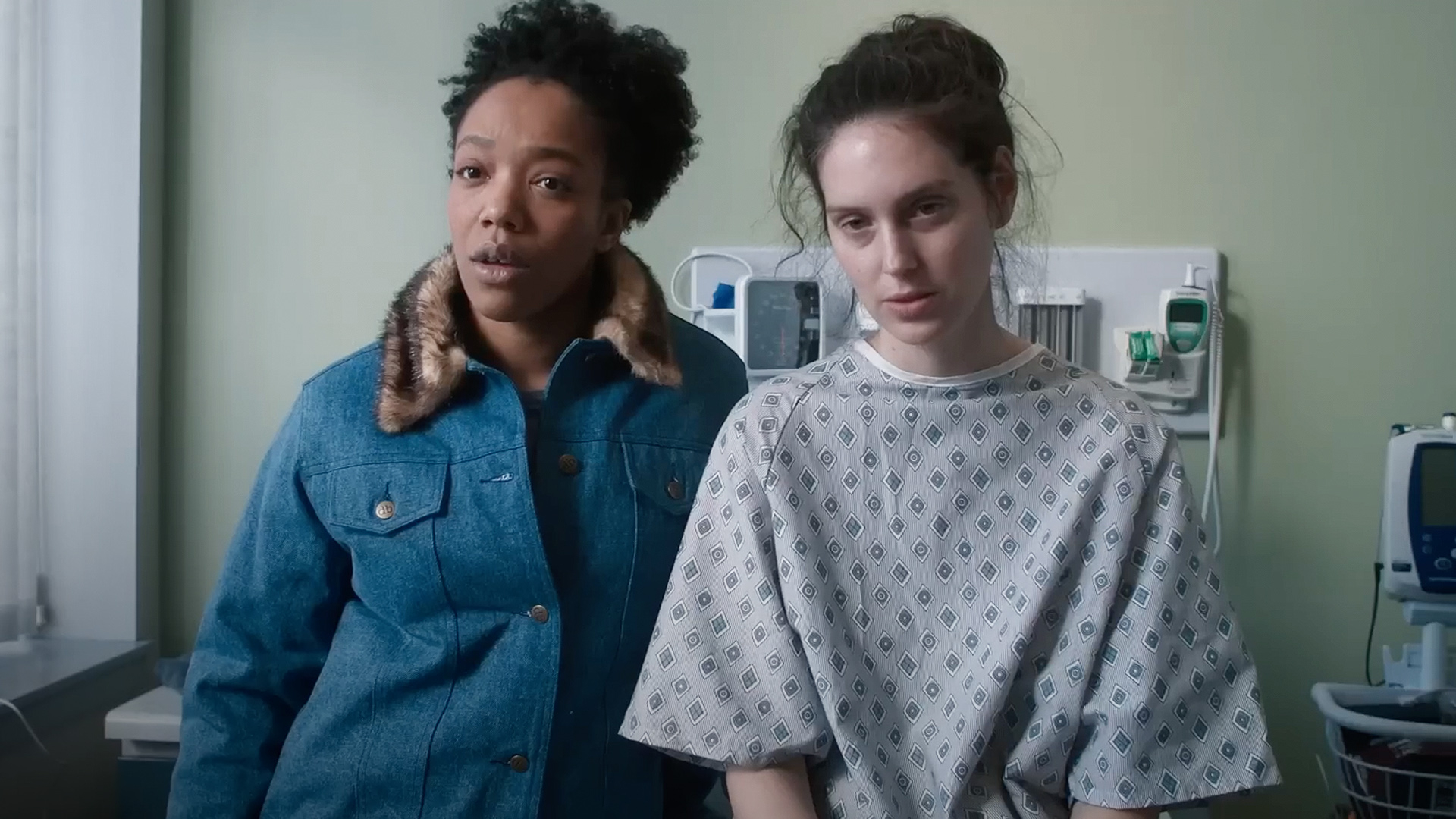
Sorry, Baby introduces us to Agnes (Eva Victor), a graduate student preparing to finish her thesis in a small college town while nurturing her longtime friendship with Lydie (Naomi Ackie). While finishing her studies, Agnes has a traumatic encounter with her professor Preston Decker (Louis Cancelmi). In the years following, Agnes is left to find her way back to being whole again.
Sorry, Baby takes an overarching look at the journey of processing and eventually overcoming trauma. Broken down into yearly chapters of Agnes’ before and after the incident, the audience receives a character study in denial, anger, sadness, and the full spectrum of how human beings deal with emotion following tough incidents. When we first meet her, Agnes feels like her life is lagging behind in life in comparison to Lydie and her peers overall and the attention she receives from Decker represents a respite from that stagnation, or at least a recognition that she is worth paying specific attention to like others in her orbit. It’s what makes their negative encounter hold extra weight when it happens and the way it’s written and directed by Victor, along with her director of photography Mia Cioffi Henry, only adds to the thematic weight.
The passage of time during the incident is shown through a static shot of Preston’s house as the trajectory of the sun goes from day to night and ends with a silent, behind the back tracking shot of Agnes walking to her car and driving back home with no music. The long take with no dialogue or sound other than the car and environmental background noise allows the moment to settle in as we wonder what exactly happened in the house and understand Agnes’ emotions without them being directly communicated other than us observing her actions from behind. It’s sure to be a powerful moment for many viewers and certainly is the film’s most memorable sequence. From there, we see Agnes processing what she’s gone through; witnessing the first time she feels comfortable saying what happened aloud in front other people not named Lydie, processing her grief, and finally being able to move forward. Victor does well in portraying each stage with empathy and believability, allowing viewers to process things alongside the character of Agnes and bringing a realness to what she’s gone through. Sorry, Baby is a methodical character study that is sure to speak more loudly to others than a wide, general audience, but it’s a well made foray into filmmaking for the first time director.
Image: A24


