

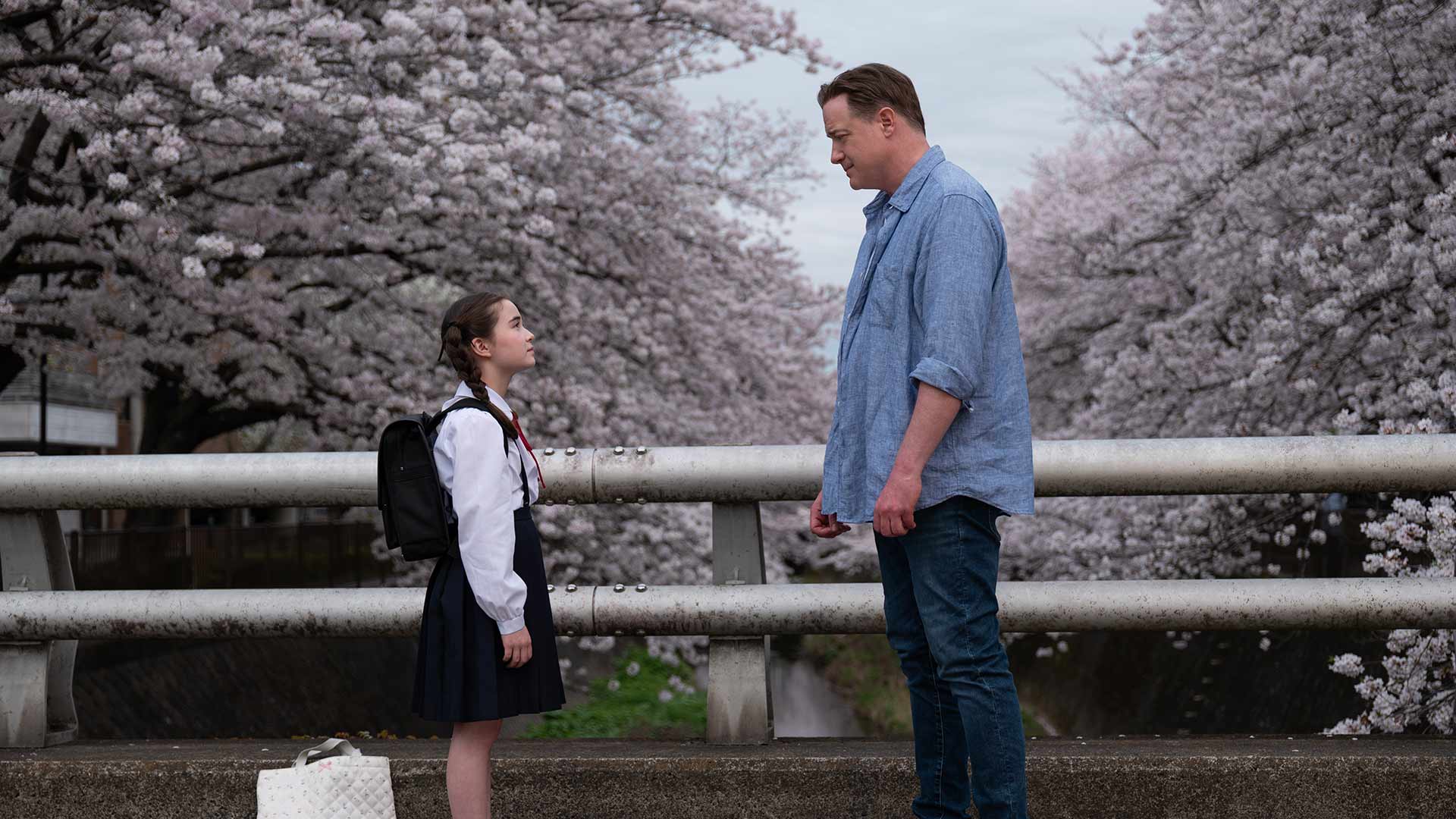
After 2022’s “Brenaissance” that saw the actor make a triumphant return to Hollywood with his Academy Award winning turn in The Whale, Brendan Fraser hits the big screen for his first starring role since bringing home the Oscar. How will he followup on his good will and fortune? Rental Family takes us to Japan to follow Phillip Vandarploeug (Brendan Fraser), an American actor living in Japan. In between auditioning for long-term gigs, Phillip soon lands an unusual opportunity with a Japanese agency owned by Shinji (Takehiro Hira) to play stand-in roles in strangers’ lives; impersonating fiancés, funeral attendees, and the like. Phillip soon finds himself having to confront the moral complexities of this work however when he is hired for two roles; one playing the long lost father of Mia (Shannon Gorman) by her mother Hitomi (Shino Shinozaki) so that Mia can gain entry into private school and the other playing a journalist sent to interview legendary director Kikuyus Hasegawa (Akira Emoto) .
Rental Family is a film that is the perfect mix of topicality and emotionality. The amount of care for the characters that director and co-writer Hikari is able to engender through its story and performances is exceptional. Fraser and Gorman display a remarkable level of chemistry in their portrayal of the father-daughter dynamic that secretly isn’t, generating empathy for both Mia’s joy at finally connecting with who she believes is her father and Phillip’s moral conundrum about doing what he was hired to do, being there for the sake of both Mia and Kikuo’s futures, but being lying in order to do so. The emotionality in both experiences come through onscreen through the genuineness of both actors’ performances; the hurt, confusion, and happiness all come alive in ways that are relatable and experienced by the viewer more than observed. Phillip’s relationship with Hasegawa is equally emotional not just from a dramatic standpoint that further supports the film’s moral question, but is also a key source for Rental Family’s levity that allows it to hit all aspects of the emotional spectrum and allow it to be the well rounded film that it is. In a film filled with emotional scenes, Emoto’s climactic scene may be the most emotional and he delivers a pitch perfect performance as an old legend who’s holding on to one last memory in his final days.
Likewise, the chemistry on display between Phillip and his co-workers at the rental family agency provides a dynamic that makes their actions during the film’s third act when Phillip needs their help all the more believable. The agency interacts with each other as a small workplace team would and feel like an integral part of the story rather than simple supporting characters there just to round out the cast and fill space. Hira and Mari Yamamoto, who plays fellow agency actor Aiko, both shine in their supporting roles providing both additional depth and characters that stand on their own. The subplots revolving around Shinji and Aiko’s experiences within the agency provide added depth to the themes regarding ethics that are at the center of the film. Through both of Phillip’s clients, and his coworkers’ subplots, Rental Family’s critique of whether business and human emotion can truly ever be separate is thoroughly explored. Even when acting out a role, once emotions are even mimicked, faked attachments can turn real and more importantly, can result in real consequences. The actors are taking workplace safety risks that lean more toward the psychological rather than the physical where they not only delude others unknowingly, but ultimately work toward deluding themselves. It’s no suitable replacement for reality and creates complications that can hurt all involved in long run as much as it may help. The film does a fantastic job of displaying this in totality, both the good and the bad through the fates of all characters who appear onscreen.
Rental Family also manages to provide timely commentary on our own world which is hyperconnected digitally yet increasingly disconnected personally. As the existence of the rental family agency is meant to portend, when society gradually becomes less interpersonal, making people feel seen becomes a premium. Families that don’t accept who one another are or are afraid to have tough conversations with each other outsource the hard part of interpersonal relationships and place band-aids over gaping wounds, only prolonging or worsening problems rather than solving them. Its message regarding honesty, genuine connection, and the need to be seen is sure to connect with many.
Rental Family is a film that is simultaneously touching and challenging, making for a very affecting story that is resonate and entertaining. It strikes a perfect tone throughout, funny when it needs to be, featuring emotional highs and lows that create characters and onscreen relationships that the audience can’t help but be drawn into, while reflecting on their own lives and experiences. Brendan Fraser is magnetic as the film‘s lead, perfectly capturing the emotion and ethical complications of the story and displaying indelible chemistry with all of his castmates, led by Shannon Mahina Gorman who shines in her first role and Akira Emoto’s deeply affecting turn as Hasegawa. Simply put, this is one of 2025’s best films and a must see.
Image: Searchlight Pictures


