

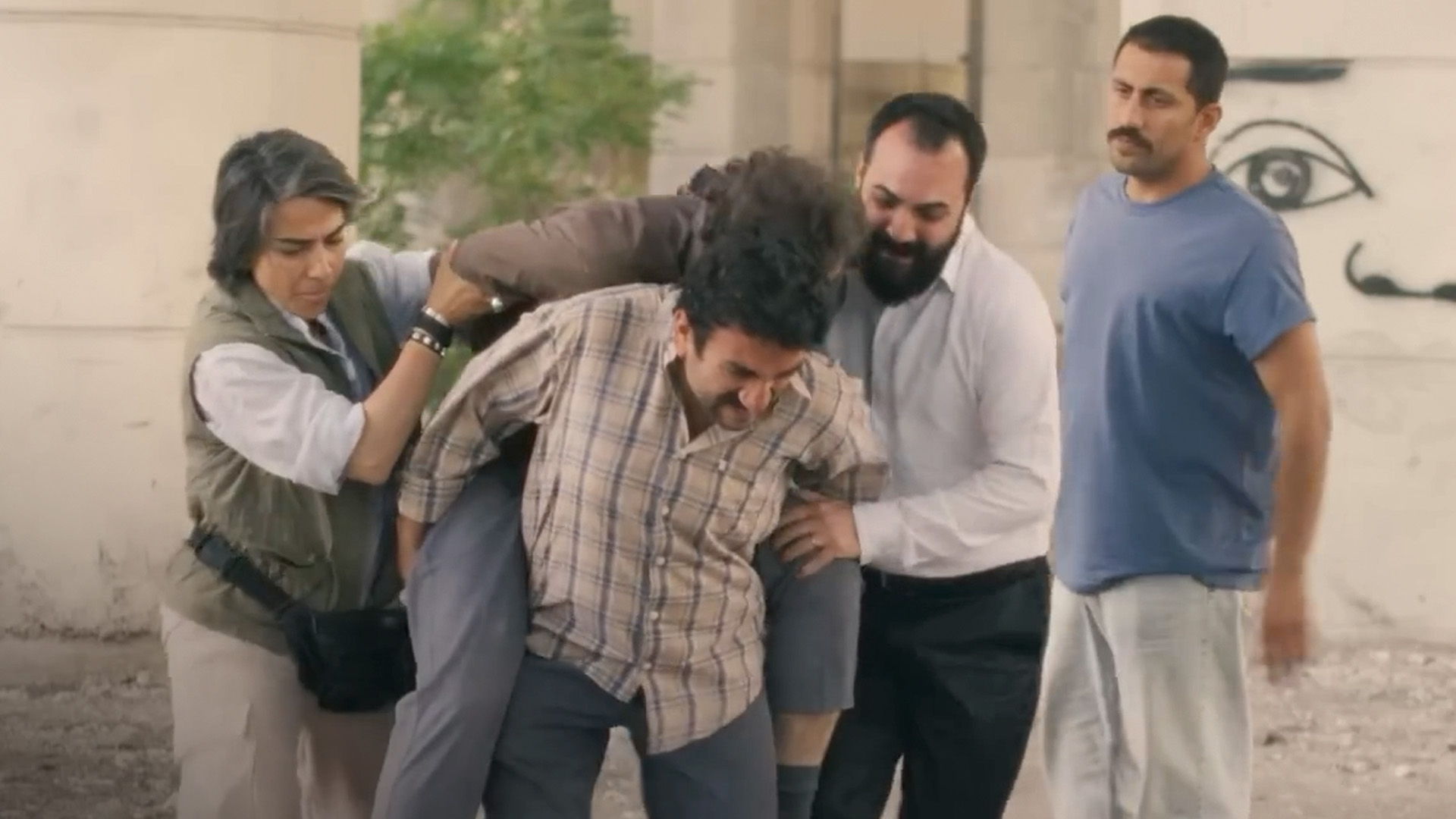
Iranian writer/director Jafar Panahi has been through quite a lot in his determination to speak against the Iranian regime. Jailed twice over the past 15 years for being accused of producing propaganda against the state and conducting a hunger strike against the government in 2022, he put not only his filmmaking career but his life on the line to stand up for what he believes and advocate for justice. His latest film may be autobiographical in this sense as he explores what victims of government mistreatment may have to ponder in its aftermath.
It Was Just An Accident begins on a dark night in Iran when Rashad (Ebrahim Azizi), his pregnant wife (Afssaneh Najmabadi), and their daughter (Delmaz Najafi) have car trouble while driving home. Rashad asks for help at a car shop their vehicle has stalled in front of when an auto mechanic named Vahid (Vahid Mobasseri) hears recognizes the sound of his prosthetic leg and recognizes it as belonging to “Peg Leg” Eghbal, an Iranian intelligence agent who tortured him on behalf of the regime for protesting in favor of workers’ rights. Vahid follows Rashad who he only suspects is Eghbal, since he never saw his face during his imprisonment and only heard his voice and prosthetic leg, and kidnaps him; planning to bury him alive in revenge. The man begs for his life while denying being the man he’s looking for and Vahid hesitates to kill him until he can be sure. Vahid soon reaches out to other former prisoners of the infamous torturer to see if they can identify him and the group soon finds itself at odds over whether vengeance is the right thing to seek.
What immediately stands out about this film is the masterful way in which Panahi presents the moral dilemma at the center of its plot. When we first meet Rashad, we see only his interaction with his family without any other reference as to his background or character. This serves to humanize him without giving any hint as to whether he’s the monster who tortured the group of people who have taken him captive, or just an innocent family who himself is the victim of mistaken identity. At the same time, the film avoids using exposition or long monologues to describe the tyranny of Iran’s authoritarian regime and instead shows the audience the reach of their tyranny and its effect on the Iranian populace through character dialogue and their reactions to learning about Vahid’s discovery of Eghbal.
The juxtaposition of the little we know of Rashad/Eghbal and the multiple character reactions to him serve to both strengthen both the mystery at the center of the film and the moral dilemma the characters face. Yes, Hamid’s (Mohamad Ali Elyasmehr) intense anger at his tortured makes complete sense and his wish to exert immediate revenge is understandable, but what if they’re wrong? What if, in the midst of their trauma, they and their memories of being in fear for their lives flooding back, they’ve misidentified an innocent man and are on the verge of making a fatal mistake? And even if they are right and Rashad is Eghbal, wouldn’t killing him change them into the monsters they hate? Watching the group ponder these questions while wrestling with their emotions makes stark not just the conundrum within the film, but the real life struggle against brutal governments in real life not just in Iran, but worldwide.
It Was Just An Accident’s intense climax attempts to provide some form of catharsis in answering the questions it presents, shot with the intense red lighting of car taillights and the camera held static and pulled in closely to Rashad/Eghbal’s face with Vahid out of frame and only his voice engaging with the man as they negotiate for his life. Whether what Vahid and photographer Shiva (Mariam Afshari) decide to do was the right call, especially in light of the resulting fallout shown at the very end of the film that is one of the most terrifying moments in film this year, will be fully left up to the audience to debate and decide. What It Was Just An Accident is most concerned with is asking viewers to wrestle with what the best response to despotism is and how does one balance their own nature with what may be needed to respond decisively to bad people and systems? They’re probing, important questions that the film presents in an entertaining and thought-provoking way.
Image: NEON


