

The amount of time between Avatar and its sequel Avatar: The Way of Water was a period of 13 years. Audiences won’t have to wait that long this time as visionary director James Cameron brings his space epic back to theaters with its latest installment three years after its predecessor.
Avatar: Fire and Ash picks up in the year following The Way of Water as Jake Sully, Neytiri (Zoe Saldaña), and their family deal with the grief of the death of their eldest son Neteyam death. Quaritch (Stephen Lang) continues to pursue Jake and in doing so allies with Varang (Oona Chaplin), leader of the aggressive Na’vi tribe the Mangkwan clan, also called the Ash People.
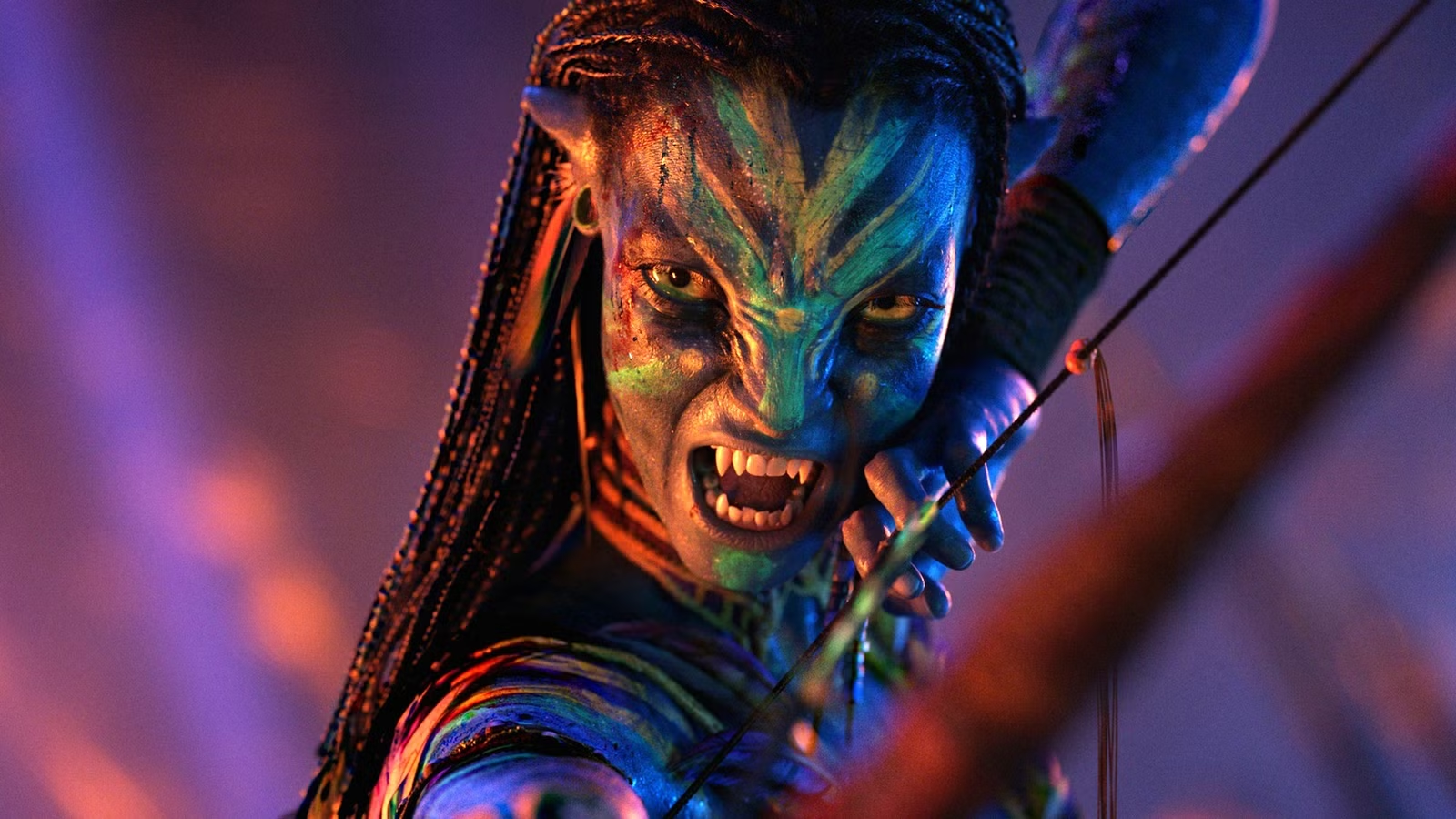
The Avatar franchise has become the gold standard of cinematic visual effects and Cameron continues to wear that crown in Fire and Ash, even adding some additional flair in terms of the film’s action set pieces. The high frame rate thrusts viewers right back into the beautiful world of Pandora as if it were real with spectacular 3D visuals full of vibrant and brilliant color. The film also ups the ante on its action scenes, featuring thrilling chase scenes, battles that span land, air, and sea, and are sprinkled throughout its runtime rather than saved for the third act.
Thematically, Fire and Ash also adds some depth to its story, exploring the fissures that grief can create within a family and community. Jake, Neytiri, and the kids are still struggling with the loss of Neteyam and residual feelings of blame and anger threaten their relationships with each other. The pain of loss also serves as fuel to the fire of the Ash People, as explained by Varang. The Ash have turned away from their faith in Eywa after suffering the tragedy of having their community burned downed and losing everything as a result. Varang learning to harness the power of fire has changed their belief system and made them more ruthless as a result. A line from the script quoted by one character states that “The fire of hate leads to the ash of grief” and Neytiri’s struggle to let go of her hatred for humans is documented as it puts her and her family in danger. Likewise, the Ash People’s response to their tragedy has resulted in terror for the Metkayina and all over Na’vi that the Ash pillage and attack. It’s an interesting subject for the film to cover, though not as much time is spent here in favor of continuing to build out the world.
Which is indicative of Fire and Ash’s main, fatal flaw. While Cameron’s technical prowess and ambition both remain in this latest installment, Fire and Ash is ultimately hampered by a story that mostly plays out as a retread of its predecessor rather than a continuation of an epic saga to match its epic visuals. For more than three hours, we see Quaritch hunt and antagonize Jake and his family, Neytiri deal with her overwhelming anger towards humans, Kiri struggle to understand her mysterious connection to Eywa, Spider deal with conflicting feelings toward Quaritch as his biological father, and Jake’s teenage kids rebel against his guidance in order to help combat the sky people. If this sounds like a rehash of The Way of Water, that’s because it largely is and it certainly feels that way while watching. There is some incremental progression of the larger Avatar narrative through changes physically experienced by Spider, the beginnings of psychological changes in Quaritch, Kiri who experiences a mixture of both as she grows closer toward Eywa, and Neytiri’s arc in her feelings of rage towards humans as encapsulated by her feelings toward Spider comes full circle as part of Fire and Ash’s specific vengeance and grief theme. Despite this, the breathtaking visuals aren’t enough to overcome the feeling that you’re watching the same story being told again just with a dynamic new villain and more elaborate action set pieces. You can’t take your eyes off the screen but, you can’t fully engage with the story being told either.
It’s a catch-22 that finally matches the historically outsized criticism toward the Avatar franchise from its vocal detractors. Long criticized for a derivative, forgettable plot this time around what we’ve been presented actually aligns with the claims. If you’re going to see this film, it still must be done in theaters, but for the first time the technical prowess it displays may not be a big enough leap forward to justify the trip to multiplexes. Oona Chaplin is magnetic as Varang and the battle sequences utilize every piece of the visual technology James Cameron has spent decades developing, but a ho-hum story that barely moves anything forward pulls down VFX that are still similar to what we’ve saw just two years ago, even if they’re given a bit of a boost. Cameron remains a courageous filmmaker which isn’t encapsulated just by his continuance of developing innovative new cinematic technical language, but also through the storytelling as he won’t hesitate to kill off established characters in service of story. It will still be interesting to see where Cameron takes us next in this world, but it must be some place new if the benefit of the doubt he’s received from those who believe in his visions is to remain.
Image: 20th Century Studios


