

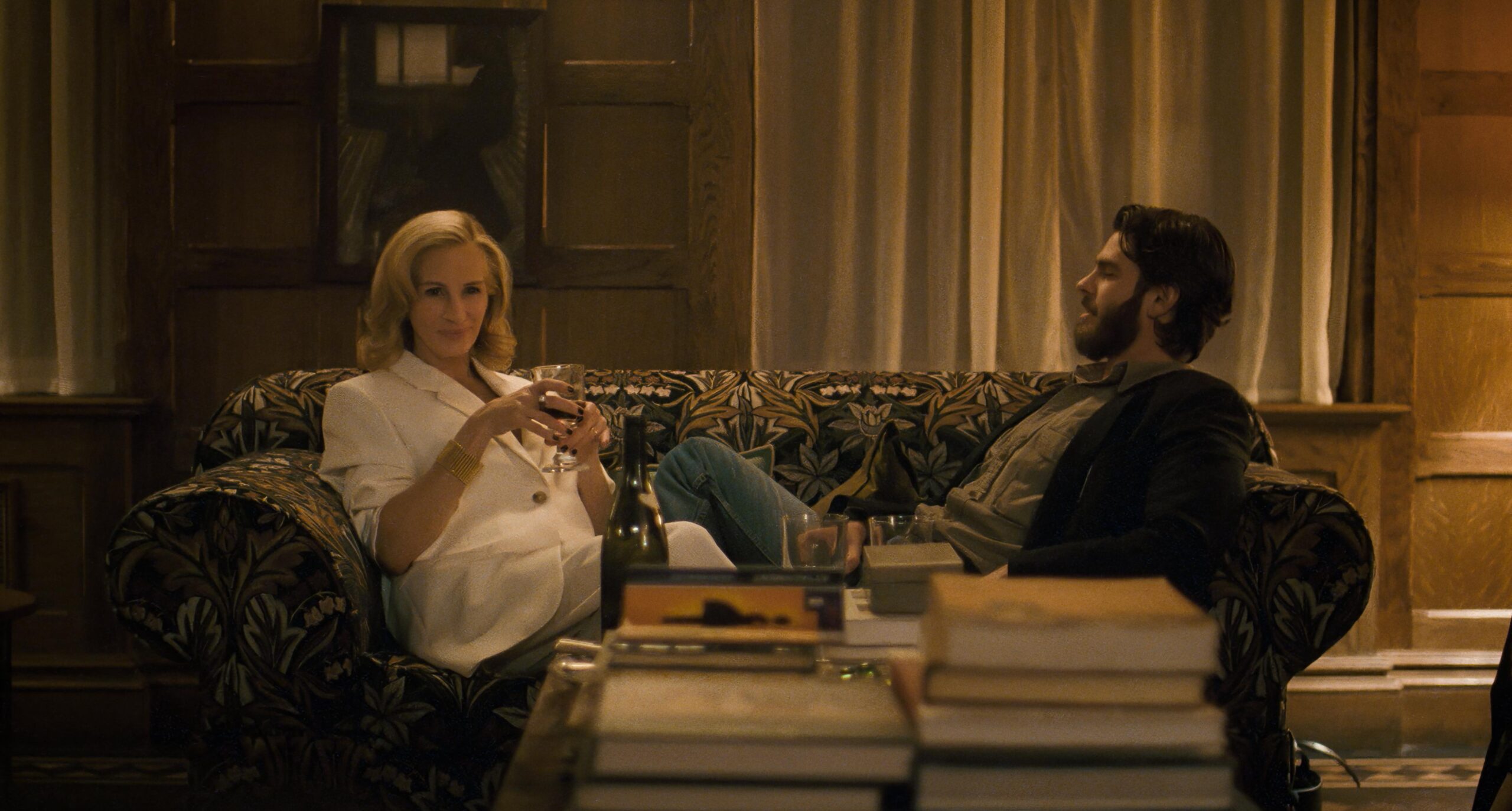
Director Luca Guadagnino has been on a tear since 2017’s Call Me By Your Name, releasing films that have been critically acclaimed and impactful in the cinematic zeitgeist on a consistent basis. It is no wonder that his latest release After The Hunt, featuring screen legend Julia Roberts and some of the hottest younger names in Hollywood has been garnering some buzzy anticipation.
The film introduces us to Yale philosophy professor Alma Imhoff (Julia Roberts), who is on the brink of gaining tenure and enjoying a party with her husband Frederik (Michael Stuhlbarg), her close co-worker in the philosophy department Hank Gibson (Andrew Garfield) and affluent student Maggie Price (Ayo Edebiri). The day after the party, Maggie accuses Hank of sexual assault and seeks counsel and support from Alma. The professor is soon forced to grapple with her own secretive past while navigating her complicated relationships with all three persons in her life.
The fallout from the accusation in the film launches into an examination of cancel culture, who is believable, and confronting how one’s experiences color our inherent biases in analyzing serious allegations. After The Hunt is an ambitious film that seeks to cover a lot of analytical ground on both the individual, humanistic level and a grander scale providing commentary on our current moment and society writ large. Alma is forced to confront not just the changing social mores of the students she teaches, but her own trauma from her past, the choices she made, and how she has carried this with her moving forward. After The Hunt muddies any deep dive it seeks to make through its story and characters by trying to handle too much in one pass. The mystery of what happened between Maggie and Hank, Alma’s inability to impartially navigate being in the middle of the dispute due to her relationships with all parties involved, and the slow reveal of it all has some promise, but is lost amidst the film’s slow pace and lack of cohesive focus. The reveal of Alma’s past trauma comes too late in the story to be as impactful as it could have been, tying all of the themes together and elevating the character work. As a result, the film feels a little scattered and unclear, moving from one thing to another without delving in substantively to anything that would keep the audience fully engaged.
After The Hunt is an interesting film, a sort of treatise on #MeToo that slightly feels like it arrived slightly late to the zeitgeist. The cast gives interesting performances led by Julia Roberts and Ayo Edebiri that are perhaps all the more impressive since there’s not really anyone who’s easy to root for and each is at least a little reprehensible in their own way. In that regard, this film feels a little more realistic than typical fare within this space, capturing the smugness and entitlement of high-level academia, generational political differences that muddy the water when it comes to situations such as these. There are no angels here and truly, what’s more human than that? While kudos must be extended for the morally grey area the film wades into, After The Hunt is ultimately too slow a burn and covers a topic done to death now halfway through the 2020s to be compelling, even if it tries to a slightly tact. Perhaps it’s just a few years too late to the game.
Image: Amazon MGM Studios


